Airport-linked operations
Proximity to Dubai International Airport can influence how efficiently goods move, how quickly shipments are handled, and how well the business coordinates warehousing, customs, and delivery.

Dubai Airport Free Zone Advisory
If your business depends on airport proximity, cargo movement, customs coordination, or a trade-oriented free zone structure, DAFZA may be worth serious attention. If those advantages do not materially support how your business operates, it is usually better to look elsewhere. Setting up in DAFZA is not about choosing a famous free zone — it is about whether the jurisdiction's location, licensing ecosystem, and operating model fit the commercial reality of the business.
Answer a few questions and receive personalized plan,
estimated costs and timelines that best fit your goals.
What DAFZA is
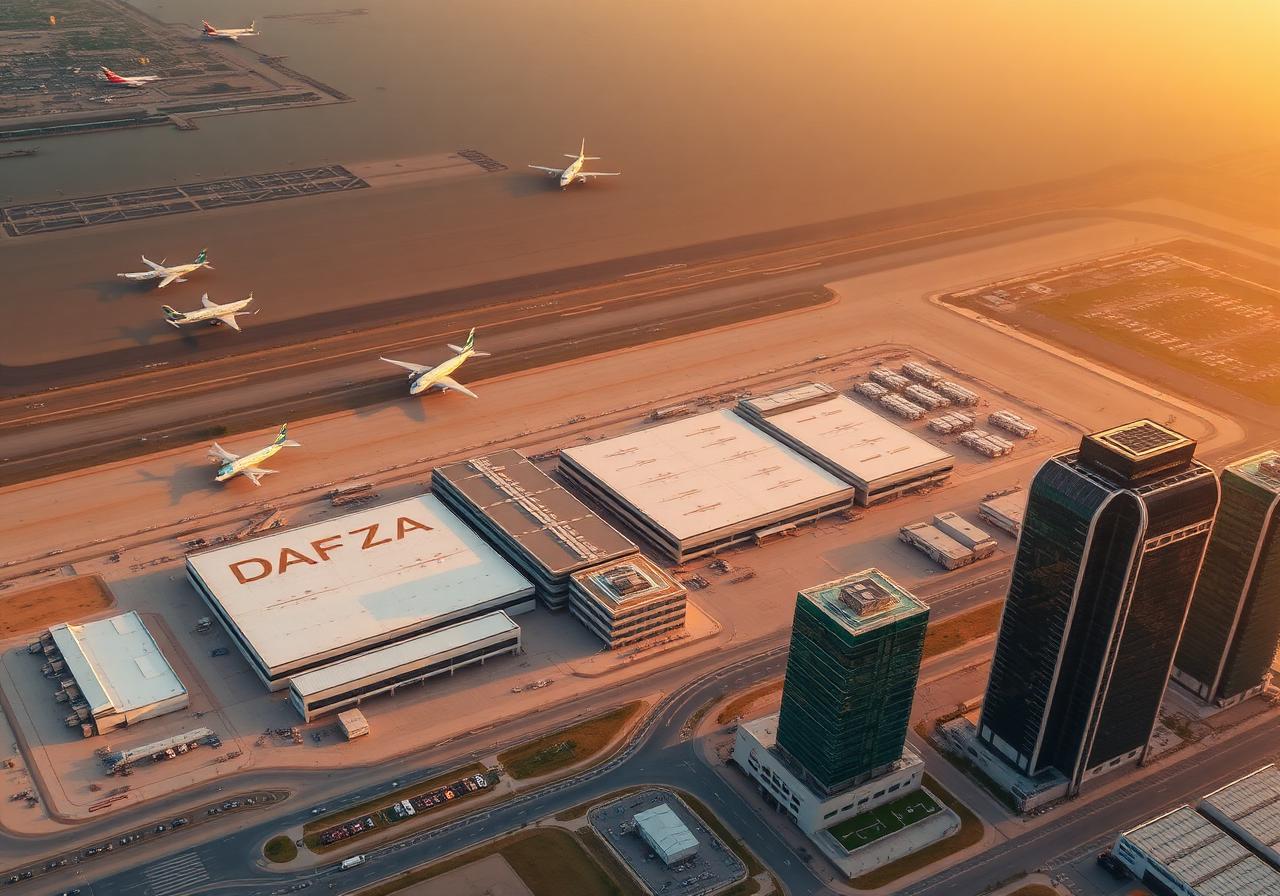
Dubai Airport Free Zone, or DAFZA, is a Dubai free zone located next to Dubai International Airport. That location matters because it is closely tied to logistics, freight forwarding, import documentation, cargo handling, and regional distribution.
In practice, proximity to the airport is more than a branding advantage. It can influence how efficiently goods move, how quickly shipments are handled, and how well a business coordinates warehousing, customs processes, and delivery timing. For companies that live or die by speed and operational clarity, that can be a real commercial advantage — airport proximity can shape the quality of a supply chain, not just the address on a license.
Why DAFZA
DAFZA appeals to businesses that need a structured free zone environment with a practical link to trade and cross-border movement. It is often selected by companies that already understand their operating model and want a jurisdiction that supports it. The real advantage is not being in Dubai — it is being in a jurisdiction whose layout, facilities, and licensing environment can support import documentation, cargo handling, supply-chain timing, and warehouse-oriented operations.
Proximity to Dubai International Airport can influence how efficiently goods move, how quickly shipments are handled, and how well the business coordinates warehousing, customs, and delivery.
A structured free zone environment built around logistics, freight forwarding, import documentation, cargo handling, and regional distribution.
Office, warehousing, meeting, and commercial facilities that support real operations — not just a registration address.
DAFZA works best when the strengths match the business model. It is not the right answer just because it is well known.
When DAFZA makes sense
DAFZA becomes compelling when geography helps the business move faster, not when geography is merely impressive. If any of the goals below describe how your company actually operates, DAFZA is worth a serious look.
I import, export, or re-export goods across borders
My business depends on airport-linked logistics or cargo
I run e-commerce with stock, fulfilment, or returns handling
I want a free zone with real warehouse and premises options
I need a regional distribution or trading base
My model benefits from customs and freight proximity
I am an aviation-adjacent business linked to airport activity
Fit assessment
DAFZA is not the best answer for every business. If the value your company creates comes from moving goods, DAFZA is often relevant. If it comes mainly from local customer access, a different jurisdiction may be stronger.
Advisory review
The better decision usually fits the business model, future growth plans, banking reality, and operational needs. The questions below shape whether DAFZA is genuinely the right structure or whether another route makes more sense.

Whether the business genuinely benefits from airport-linked logistics
Whether DAFZA is the most suitable jurisdiction for the commercial model
Which license and legal structure fit the activity and ownership
What premises are needed — office, warehouse, or commercial facility
How the activity, structure, and story hold up in banking KYC
Where suppliers, customers, and freight partners are located
How the structure may need to evolve as the business scales
What documentation is needed to avoid setup and banking delays
The goal is not to push every business into DAFZA. It is to determine whether DAFZA's advantages are genuinely relevant.
Answer a few questions and receive personalized plan,
estimated costs and timelines that best fit your goals.
Licenses & structures
DAFZA supports several license types, and the right one depends on what the company actually does. The legal structure matters just as much as the license — a free zone establishment often suits a single shareholder, a free zone company suits multiple owners, and a branch can make sense for a foreign parent that wants a UAE presence without a separate standalone entity.
Suits import, export, and re-export activity where the business is moving inventory and coordinating commercial flow.
Fits businesses that need broader commercial flexibility across a wider range of activities.
The more natural route where manufacturing or assembly is part of the model and premises support goods handling.
Relevant when the business is not centered on physical goods but still needs a DAFZA presence and premises.
Sector-specific guidance
DAFZA's usefulness depends on the sector. The clearer the match between the business model and airport-linked infrastructure, the stronger the case for the jurisdiction.
Airport proximity can reduce friction across cargo handling, storage, dispatch, and supplier coordination. Location supports the mechanics of the business, not just its address.
Fits when the model involves import documentation, re-export, inventory flow, or regional distribution. The more the business depends on moving goods, the more DAFZA tends to make sense.
Strong option when the model includes stock, fulfilment, warehousing, returns handling, or cross-border shipping. Less relevant when the business is purely digital.
Proximity to Dubai International Airport can matter for suppliers, cargo partners, and the timing of operational movements.
Useful when the business needs a free zone environment connected to goods handling — provided premises, approvals, and operational needs align with the production model.
Can work when the business is international, cross-border, or linked to a broader trading group. A straightforward consultancy may find another free zone simpler and more cost-efficient.
Important context
Banking is one of the most important parts of the DAFZA decision because a licensed company still has to pass the bank's due diligence. The bank will look at the business activity, the expected transaction profile, the source of funds, and whether the company has substance. A trading company with invoices, suppliers, shipment records, and a clear freight or cargo profile is usually easier to present than a vague structure with no operational logic. The strongest banking profiles connect three things clearly: the activity, the legal structure, and the commercial reason for choosing DAFZA.
The bank is not only reviewing a company. It is testing whether the story makes commercial sense.
Operational reality
DAFZA setup is often straightforward on paper. Most delays come from ambiguity — activity and documents that do not match, incomplete UBO paperwork, office or visa planning left too late, and banking files that were not built to explain the business. The items below should be considered before incorporation, not after.
Activity selection aligned with the actual business
Shareholder, UBO, and KYC documentation
Office or warehouse requirements matching operations
Visa allocation and staffing plan
Bank account opening — activity, transactions, source of funds
License renewals and ongoing compliance
Import documentation and customs coordination
Long-term restructuring and scaling considerations
A warehouse matters if goods are moving. An office matters if the company needs staff, meetings, or a formal operational base. Facilities matter most when they support actual substance, not just appearance.
License type, number of activities, office or warehouse requirements, visa allocation, approvals, renewals, and compliance support all shape the cost. Cost is a structural outcome, not a fixed number.
Registration, license issuance, visas, Emirates ID, banking, and operational readiness happen at different paces. Banking is usually the longest stage because of KYC and compliance review.
Compared with other options
The most useful comparison is not which jurisdiction is cheaper. It is which jurisdiction better supports the business model. The table below frames how DAFZA lines up against DMCC, IFZA, Meydan, mainland, and offshore for the decisions that usually decide the fit.
DAFZA vs DMCC
DAFZA may be a stronger fit when…
DAFZA is more operationally tied to logistics and airport-linked trade.
The other option may be stronger when…
DMCC suits companies wanting a broader commercial identity and sector flexibility.
DAFZA vs IFZA
DAFZA may be a stronger fit when…
DAFZA fits when airport infrastructure, customs, or trade premises matter.
The other option may be stronger when…
IFZA suits founders who want an adaptable, general-purpose free zone.
DAFZA vs Meydan
DAFZA may be a stronger fit when…
DAFZA is the more serious option when goods handling and supply chain movement matter.
The other option may be stronger when…
Meydan can work well for leaner, service-led businesses.
DAFZA vs Mainland
DAFZA may be a stronger fit when…
DAFZA wins when the business can work effectively inside a free zone and benefits from trade logistics.
The other option may be stronger when…
Mainland wins when direct UAE market access, local contracting, or broader onshore freedom is needed.
DAFZA vs Offshore
DAFZA may be a stronger fit when…
DAFZA is for active operating businesses that move goods or serve customers from a commercial base.
The other option may be stronger when…
Offshore is for holding and ownership, not operating activity.
Related
Answer a few questions and receive personalized plan,
estimated costs and timelines that best fit your goals.
Common mistakes
The biggest mistake is choosing DAFZA because it is familiar rather than because it is useful. The others usually follow from the same pattern — a structure picked before the business model was tested against it.
The strongest reason to pick DAFZA is usefulness, not name recognition. Reputation alone does not make it the right structural fit.
Unclear structure, weak documentation, or a high-risk activity profile can create delays that are harder to solve after incorporation than before it.
The license must match the actual activity and the way the business will operate — not a generic package or the cheapest available option.
Renewals, office obligations, compliance planning, visa administration, and scaling friction all shape the true long-term cost of the structure.
How we help
Liberty Global Advisors focuses on whether DAFZA is actually the right structure before registration begins. If its advantages are genuinely relevant, the structure can be effective. If they are not, another jurisdiction may be the more intelligent choice.
How the process works
A DAFZA setup moves through several distinct stages. They are related, but they do not all happen at the same pace — planning for each of them separately usually produces more realistic expectations.
Confirm the activity, structure, and shareholding before applying.
License is issued when the file and supporting documents are aligned.
Investor, employee, and family visas processed against the visa quota.
Usually the longest stage — activity, transactions, and source of funds are reviewed.
Premises, staff, compliance, and day-to-day operations lined up from the start.
Who this page is for
This page is written for founders and business owners who want to decide whether DAFZA is the right structural fit — not simply the most familiar name on a list.
Traders importing, exporting, or re-exporting goods across borders
Logistics and freight forwarding businesses coordinating cargo flow
E-commerce operators handling stock, fulfilment, and shipping
Aviation-adjacent businesses tied to airport activity
Manufacturers and assemblers needing organized goods handling
If you recognize your situation in any of the above, the DAFZA question is worth reviewing properly before committing to a jurisdiction.
FAQ
Yes. DAFZA is often a strong fit for logistics because its location supports cargo movement, freight coordination, and storage planning.
Yes. Trading is one of the most common use cases for DAFZA.
It can be, especially if the business handles stock, fulfillment, or cross-border shipping. A purely digital service business may find another jurisdiction more efficient.
DAFZA is a free zone with its own operating framework, while mainland companies are designed for broader onshore UAE market access.
No. The right structure depends on the activity, ownership, office needs, visa plan, and banking profile.
No. Banking still depends on the quality of the business story, documentation, transaction profile, and compliance review.
Sometimes, but only when the business has a clear commercial reason to be there. A straightforward consultancy may be simpler and more cost-efficient in another free zone.
No. Airport proximity is part of its advantage, but the real value comes from how that location supports the business model — customs coordination, freight movement, and supply-chain timing.
DAFZA supports trading, commercial, industrial, service, and e-commerce licenses. The right one depends on what the company actually does.
A free zone establishment often suits a single shareholder. A free zone company suits multiple owners. A branch can make sense for a foreign parent company that wants a UAE presence without creating a separate standalone entity.
License issuance can be relatively fast if the file is clean. Visa processing adds another layer, and banking is often the longest stage because of KYC and compliance review.
Cost is shaped by the actual business model. The main drivers are license type, number of activities, office or warehouse requirements, visa allocation, approvals, renewals, and compliance support.
Speak with an advisor
DAFZA becomes compelling when geography helps the business move faster, not when geography is merely impressive. If your model depends on airport proximity, cargo movement, customs coordination, or a trade-oriented free zone environment, DAFZA is worth serious attention.
Liberty Global Advisors helps founders decide whether DAFZA fits — and structures the setup so activity, legal form, premises, and banking all reinforce the same commercial story.
Answer a few questions and receive personalized plan,
estimated costs and timelines that best fit your goals.